
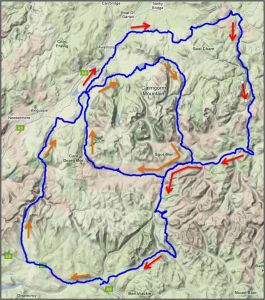
The Cairngorm Loop is a 186 mile mountain bike route that takes in some of the best tracks and trails that the area has to offer, the challenge of the event is to complete the 186 miles in under 56 hours. You can do this at any time but twice a year (April and September) there is a group ride, effectively a race, there is no entry fee or prize money and it is totally unsupported, you ride as if doing it yourself and no caches or pre-booked accommodation is allowed. More information about the challenge is on the Cairngorm Loop webpage. I put my name down for the April group ride and this was to be my motivation over the winter to get in shape to complete the challenge, it also gave me some time to think carefully about the gear and equipment I would need and also plenty of time to get the bike in good mechanical working order. The bike I use is a 7-year-old Specialized Rockhopper SL hardtail mountain bike, with a 21 inch frame, it has 26 inch wheels, Deore XT gears, Avid Elixir disc brakes and a Rockshox Reba front fork. It fits me well and has an excellent light weight aluminium frame. I hit the trails at the weekend with it and use it for commuting to work during the week, I try to clean it regularly, particularly the drive train and keep it well lubed. However little problems were starting to mount up though, skipping gears, damaged chainring teeth, hard gear shifts, rattling pedals and a rough feeling back wheel…. time for a major overhaul.
Preparing the bike…
- Wheels The wheels i have at the moment are an upgrade from a couple of years ago and they have Stans ArchX tubeless ready rims and run on Hope hubs which use cassette bearings, which makes servicing a bit easier.
 The front wheel was running smooth but the rear wheel was feeling rough so I took the cassette cluster off and then removed the free wheel body, on Hope hubs this just pulls off and comes off with a pop, being carefull not to lose the washer which sits behind it. This gives access to the rear wheel bearings and I could feel with my fingers that one of the cassette bearings was turning very roughly and needed replacing, you tap these out with a drift (or a screwdriver if you are feeling brave…) Hope sells servicing kits which makes knocking these bearings out and back in square a lot easier. With the new bearing in the wheel it was turning smooth again. Before replacing the free hub I removed the 4 pawls and springs (responsible for that distinctive Hope buzzing sound) and cleaned everything up for inspection and found out that one of the springs was broken… this seems to be a problem with Hope hubs as I have broken quite a few, anyhow I replaced it with a new one and greased everything and popped the freehub back on the wheel and made sure it was spinning ok.
 - New cassette (Shimano XT M770) 9 speed 11-32 ratio, replacing the old 11-34 cassette as I found I was very rarely using the largest 34 cog.
- New chain (Shimano HG93) 9 speed. The last time I used a reusable link to join the chain, thinking I could then take it apart for cleaning, in practice I never did though so this time just used the pin Shimano supply with the new chain to join it together. Those re-usable links are handy to keep in your saddle bag though together with a small chain tool for any problems out on a ride.
- New chain rings (Shimano Deore FCM590) 44-32-22 ratio. I took the crank arms off the bike to clean everything up and fit these 3 chain rings. You need to make sure you fit these the right way round, particularly the middle one. I fitted the last ones and I think I put it round the wrong way…. I’m sure now that this was responsible for some of the gear change slips I was getting as the Ramps and teeth profile wouldn’t be aligned optimally. With the cranks off it was a good opportunity to clean and re-grease the bottom bracket too.
- new Jockey wheels (Shimano 105 RD-5700). This set is compatible with lots of derailleurs including mine, again care need as they are slightly different, the guide pulley is the top one and the tension pulley is the bottom one. I took the derailleur off the bike to replace these as I wanted to give it a good clean and was surprising how much gunk came out of it. After a good soaking with bike spray and oil it was moving much more smoothly.
- New gear cables (Shimano MTB stainless steel gear cable set). Everything you need in one bag, cables and outer housing, end caps and cable stops too.
- Headset service The bearings at the top and bottom of the steerer tube taken out cleaned and re-greased. I use a small neoprene collar attached with Velcro around the bottom of the steerer tube to help keep the worst of the mud and water out of the bottom bearing.
- New pedals (DMR V12 platform pedals). The old pedals were the original alloy ones that came with the bike, they were still usable but were starting to rattle quite a bit.
- New tires (Schwalbe Nobby Nics Evo, tubeless snakeskin, (26×2.25) pace star compound). The rims on my wheels are ZTR Stans Archx which are fully compatible with tubeless setups so this is the way I went front and back. The front tyre inflated straight away and soon after I heard the explosive pinging sound of the beads locking into the rims but with the back tyre I had a much harder job, even getting it inflated was tough but to get the beads locked in I tried all sorts of recommended tricks, washing up liquid on the beads, putting a tube in and trying to seat it that way (that got one side seated ok…) what done the job in the end was removing the core from the tubeless valve to allow a greater airflow from the track pump into the tyre, then pumping away furiously until finally with the sweat pouring from my brow I heard the explosive pings of success as the beads locked in. Once the beads are locked in you can deflate the tyres and the beads will stay in place, then you can inject the recommended amount of sealant into the valve hole and put the core back in and inflate the tyre as normal. They should now be immune to normal punctures as the sealant will quickly find and fill the hole in the tyres as it is spinning inside the tyre. The sealant does eventually dry up so check every now and then, I still carry a spare tube, patches and inflater just in case though!
Clothing and equipment…
Something you have to think carefully about is the clothing and equipment you take with you on the ride and that is largely dependant on the weather you are expecting, in Scotland at the end of April that can be a very tricky subject to predict! True to form the week before I travelled up to Braemar, winter returned to large parts of the country for a few days, with fresh snow and freezing northerly winds. On a bike it’s the extremities that feel the cold first, so a warm hat that fits under a helmet and winter mountaineering gloves went in the bag, along with a lightweight Montane insulated jacket which provides instant warm, particularly under a thin waterproof. Footwear choice is very important too as the route fords several rivers with no real choice but to wade straight across and this can lead to very cold feet, after much thought I decided on using my old Mammut summer walking boots, they were lightweight, comfortable and had room to get a nice thick wool sock inside too, which I was hoping would feel warm even when wet and they would be perfect on the hike a bike sections too.

Another big choice has to be made about your sleeping system, how much do you intend to get? and where do you plan to get it? There are bothies on or near the route but conditions on the ground may make you slower than expected or they could be full when you arrive there. I decided to take a lightweight down sleeping bag and a Alpkit Hunka bivi bag, so in theory I could stop anywhere. If you intend riding in the dark you need a good light and these can be expensive, the best mountain bike specific ones are probably by a brand called Exposure, I did have a look at cheap Chinese ones on eBay and was tempted but in the end I decided I would just use my old MYo XP head torch and some spare batteries. I probably would have left the stove and pot in the car just to save weight, the ready cooked meals in a bag are just as nutritious cold. Also there are places on the route to buy hot food if you arrive when they are open. To carry all this gear I used an Apidura seat-post bag (compact size,11 litres), this carried my sleeping bag wrapped inside a plastic bag and I also used a very light-weight OMM 20 litre rucksack for the other stuff including food, some tools, spare socks, maps, compass and a small first aid kit etc.
Waiting for race day…

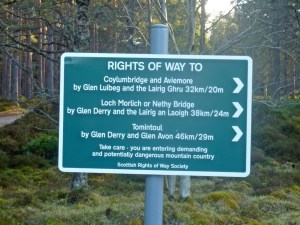
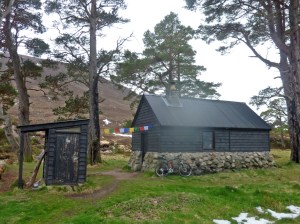
I drove up to Braemar on Thursday arriving just after 6pm, I got something to eat then reassembled the bike and packed some gear for an overnight bothy stop and set off on the 6 mile ride to the Linn of Dee, just past the car park there is a signed track that heads off north into the heart of the Cairngorms, I took this and headed for Derry Lodge, an old abandoned shooting lodge. I was surprised to read on the notice board that there were plans to turn this lodge into a hostel with warden accommodation, I had mixed feelings when I read this, it certainly would be a good location but I think also it would lessen the remote feel and the commitment needed for the long walk or ride to access the Cairngorms from this side. Also there is a very nice bothy nearby and I wondered what the impact of a hostel would have on that….. it was starting to get a bit chilly when I arrived at the bothy, there were 4 people already in, 2 young guys and a Dutchman with his son, they had the stove going strong and candles lit and it was a very cosy warm atmosphere. They had been up in the hills the day before and said the conditions had been really tough, deep soft snow in places, cold wind and rivers in spate with a thaw setting in.
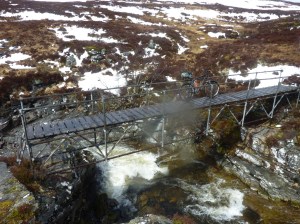
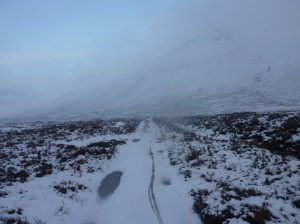
The next morning I wanted to recce a section of the race route from Glen Derry to the Eidart bridge as I would possibly be doing this section in the dark come race day, so I headed off past Derry Lodge and then north up Glen Derry to the edge of the forest to check the terrain out, I turned round here and headed back to the Linn of Dee and carried on west along the track to White Bridge and followed the track heading along Geldie Burn, a couple of hundred meters before this track crosses the river there is a smaller track heading off on the right, this leads eventually to the Eidart bridge. Up until now the cycling had been easy with a nice firm stony track to follow but now on this smaller track it was much harder because it was so wet and boggy and in places soft snow, in fact I ended up pushing the bike nearly all the way to Eidart bridge, this was as far as I went and I now retraced my route back to Braemar, however things didn’t go smoothly, just before White Bridge on a rough land rover type track I caught my front wheel in a rut and I came off the bike and my left knee hit a rock with some force. At first I just tried to walk it off and ride the easy bits but it soon started swelling up really badly and I slowly realised the race tomorrow was over for me, all that preparation and planning ruined by a lapse in concentration on an easy track, by the time I eventually reached the car in Braemar it was hurting quite a lot and it was difficult to bend it. The next day I went to the hospital to get it checked out and an X-ray confirmed that I had a clean break of my left knee cap and I’m writing this with a full leg cast on wondering when I will once again be back in the Highlands…..
Discussing this accident with friends when back home we talked about the best ways to get help if ever you are out in the wilds and need to contact the emergency services, this little video by Lyle Brotherton contains some very useful information. https://www.youtube.com/watch?v=XPZv_8dABfU
-
- Sign on the Linn of Dee road
-
- Bob Scott`s Bothy
-
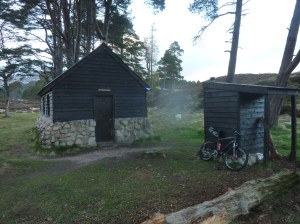
- Bob Scott`s Bothy
-

- Bob Scott`s Bothy
-
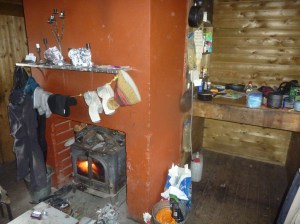
- Bob Scott`s Bothy
-

- Confluence of the Eidart and Feshie rivers
-
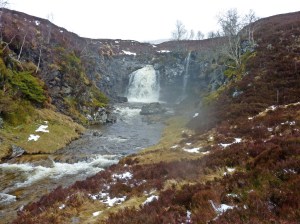
- Eidart Falls
-
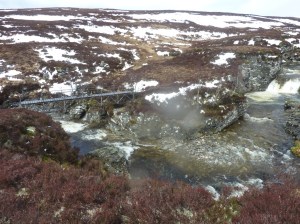
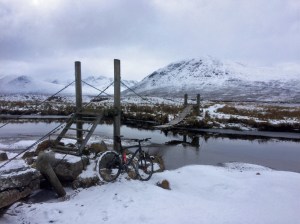
- Eidart Bridge








 ravensgully